AI Voice Tools for Restaurants: Which One Actually Works in Your Kitchen
AI Voice Transcription and Notes Tools for Restaurant Operators: Which Tool Fits Which Operation and Why
Your restaurant is losing money every time a phone order gets garbled, a call goes unanswered during dinner service, or an owner spends two hours a week manually transcribing notes instead of managing the business. This report identifies which AI voice transcription and note-taking tools actually work in restaurant environments—and which ones will sit unused because they don't fit your noise, your POS system, or your operation type.
Where Your Money's Actually Leaking
Phone order errors are costing you real revenue. In quick-service restaurants running manual order capture, error rates sit between 10 and 15 percent—that's one wrong order per six to ten calls. Each missed call during service costs you $40 to $100 in lost revenue per incident. If you're taking forty calls during dinner service and missing even three, that's $120 to $300 gone in a single night. Multiply that by 300 operating days a year and you're looking at $36,000 to $90,000 in revenue leaking out through dropped and misheard calls.
Your staff is also walking out the door with your operational knowledge. Restaurant turnover sits at 75 percent annually—meaning three-quarters of your team leaves every year. When they go, they take the preferences your regulars mentioned, the special requests for repeat orders, the supplier relationships your kitchen manager built, and the shortcuts your experienced servers developed. You have no system capturing that institutional memory, so every hire cycle starts from zero. That's wasted training time, lower service quality, and customers who feel less recognized.
Finally, you're spending owner time on work that should be automated. Manual call handling, writing down orders, transcribing staff notes, and consolidating feedback takes hours every week. That time isn't being spent on menu optimization, staff development, or customer relationships—it's going to data entry.
The Tools That Actually Fit Restaurants (QSR, Casual Dining, Fine Dining, Ghost Kitchens)
The right tool depends on three things: where the work happens (front of house or back of house), how much noise is in that environment, and what POS system you're using. If you're running QSR or high-volume takeout with phone orders, Kea AI and ConverseNow are built for this exact job. Both have proven deployment history in restaurants taking dozens of calls daily, and both integrate with modern POS systems. They're designed to catch order details in a busy phone environment and push confirmed orders directly into your system.
If you run fine dining and focus on reservations, guest preferences, and relationship capture, Otter.ai performs better. It handles quiet, structured conversation in reservation rooms and handles note-taking around dining preferences, dietary needs, and special occasion details. If your kitchen staff is capturing notes around hood and fryer noise—environments above 85 decibels—AssemblyAI Universal-3 Pro Streaming is the only tool in this set with documented performance in that noise level (6.3 percent error rate). General-purpose transcription tools like Whisper or GPT-4o Mini fail in actual kitchen conditions.
If you're on a tight margin and using legacy POS without open APIs, the risk is real: integration costs often exceed tool costs, and you may end up with manual workarounds that defeat the whole purpose. The full report maps the conditional logic for each operation type, identifies the integration traps, and shows you which tool pairs with which POS system without custom development.
The implementation sequence, the compliance and security considerations specific to restaurants, and the complete risk matrix for each tool are in the full report.
- Every tool named and evaluated — Kea AI, ConverseNow, AssemblyAI, Otter.ai, Toast
- Which tools fit restaurants (QSR, casual dining, fine dining, ghost kitchens) specifically and which quietly fail
- The compliance traps and implementation risks specific to your slice
- A sequenced recommendation — what to buy first, what to wait on, what to avoid
- Confidence ratings on every finding so you know what's solid
Delivered as a PDF immediately after purchase. No subscription. No upsell.
Causal Relationship Graph
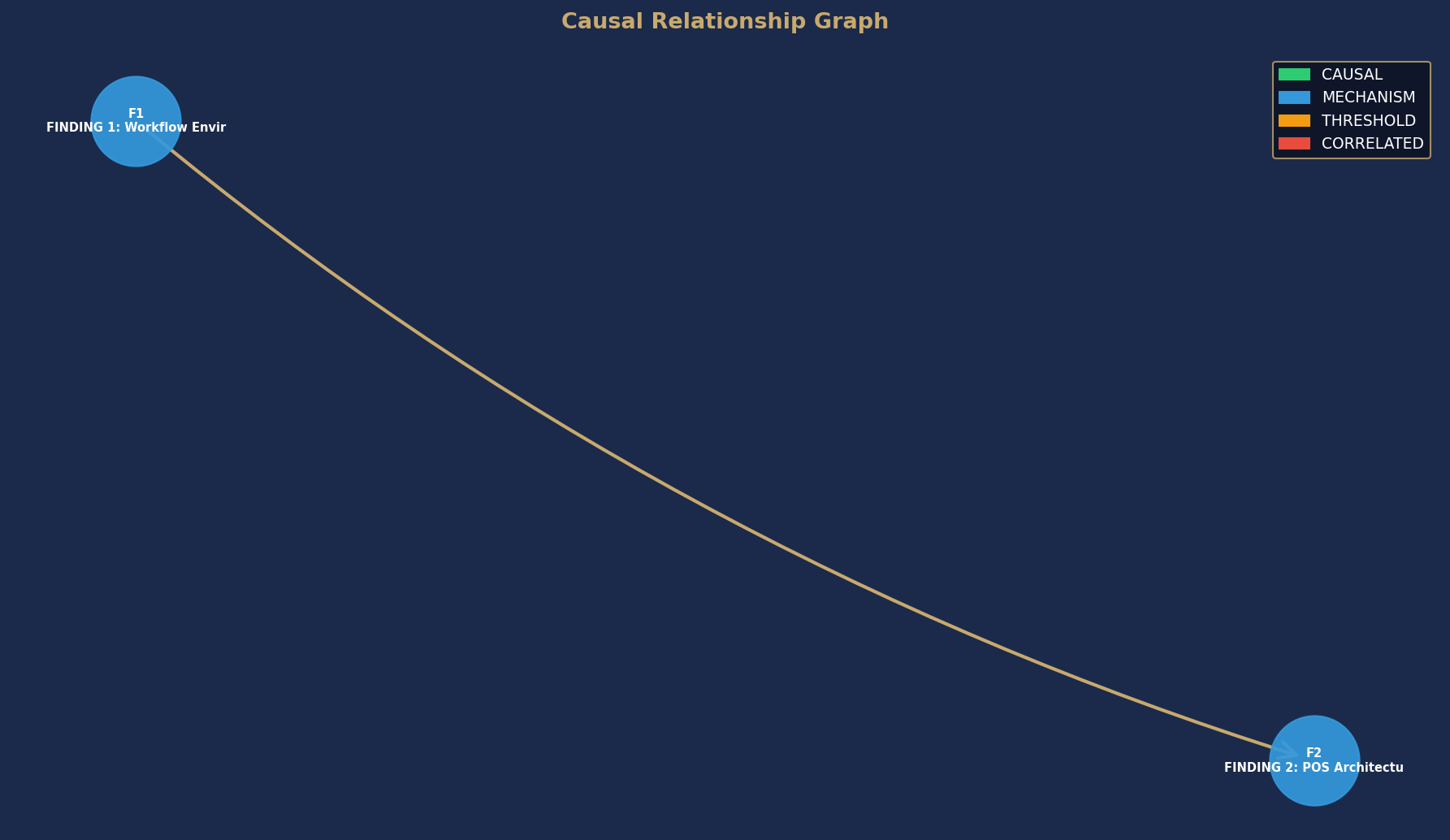
Node colors indicate causal confidence rating. Arrows show directional causal relationships identified in this analysis.
- Every AI tool named and evaluated — not placeholders, actual product names
- Which tools fit Restaurants specifically and which ones quietly fail
- The compliance traps and implementation risks specific to your practice area
- Conditional recommendations — which tool fits your specific operation and why
- Confidence ratings on every finding so you know what's solid and what needs validation
Delivered as a PDF immediately after purchase. No subscription. No upsell.
Full report PDF emailed to you immediately after purchase.