AI Scheduling Tools for Medical Practices: Which Actually Fit Your Operation
AI SCHEDULING TOOL SELECTION FOR SMALL MEDICAL PRACTICES: HOW TO MATCH THE TOOL TO YOUR ACTUAL OPERATION INSTEAD OF THE GENERIC PITCH
Your front desk staff are spending 2-3 hours every single day on scheduling tasks that could be automated. Your no-show rate is costing you $500-900 in lost revenue daily. And your scheduling tool selection is probably based on feature lists instead of what actually matches your practice's operation. This report shows you which tools solve which problems—and which ones will sit unused in six months.
Where Your Money's Actually Leaking
Start with labor. Your front desk team spends 2-3 hours daily on scheduling work—fielding phone calls, checking availability, entering patient data into your EHR, sending confirmations. That's roughly $14,000 per employee per year in pure labor cost for a task that patients could handle themselves online. If you have two front desk staff, that's $28,000 annually for work that scheduling software is designed to eliminate. Most practices don't measure this explicitly. They just know the phones never stop ringing and callbacks pile up.
Then there are no-shows. Depending on your specialty, you're losing 5-30% of scheduled appointments to patients who don't show up or cancel late. For a busy practice, that's $500-900 in lost revenue daily. Some of this is structural—patients have transportation barriers, work scheduling conflicts, or life happens. But a meaningful portion is simple forgetting or communication failure. Patients forget their appointment. They didn't see the confirmation. They thought it was a different time. Those are solvable with the right tool.
Finally, integration breakdown. You pick a scheduling tool that doesn't talk cleanly to your EHR, so your staff end up manually entering appointment data twice. The software saves you nothing. You're paying the subscription and adding manual work. Worse, if your practice runs on a specialty-specific EHR with poor external connectivity—Epic in some configurations, Cerner, older closed systems—integration projects can take 6-12 weeks and cost several thousand dollars before you even know if the vendor fits your operation.
The Tools That Actually Fit Small Medical Practices
The market includes Tebra, Kareo, Jane App, Athenahealth, Epic, Cerner, DoctorConnect, Luma Health, and Relatient. They solve different problems. If your core issue is front desk phone overload—patients can't reach you to book appointments—you want tools with self-scheduling and real-time EHR syncing. Tebra, Jane App, and Athenahealth's scheduling module excel here. You typically see ROI in 4-6 months because the labor savings are immediate and measurable.
If your no-show problem is rooted in patient forgetting or communication gaps, SMS reminders and automated confirmations move the needle. DoctorConnect and Luma Health are built for this. But if your no-shows are structural—patients lack transportation, can't take time off work, face other barriers—no scheduling software solves it. You need to know which one you have before you buy.
For complex, multi-resource scheduling—surgical blocks, imaging coordination, multi-provider cases—general-purpose appointment bookers will frustrate your team. You need specialty-built tools. And if you're on Epic or Cerner with tight integration requirements, your selection isn't just about features. It's about integration timeline, cost, and whether the vendor has worked successfully with practices your size.
The full report walks you through the conditional logic for your specific operation, the integration risks by EHR system, and which tools actually fail for small practices versus which ones deliver.
- Every tool named and evaluated — Tebra, Kareo, Jane App, Athenahealth, Epic
- Which tools fit small medical practices specifically and which quietly fail
- The compliance traps and implementation risks specific to your slice
- A sequenced recommendation — what to buy first, what to wait on, what to avoid
- Confidence ratings on every finding so you know what's solid
Delivered as a PDF immediately after purchase. No subscription. No upsell.
Finding Confidence Distribution
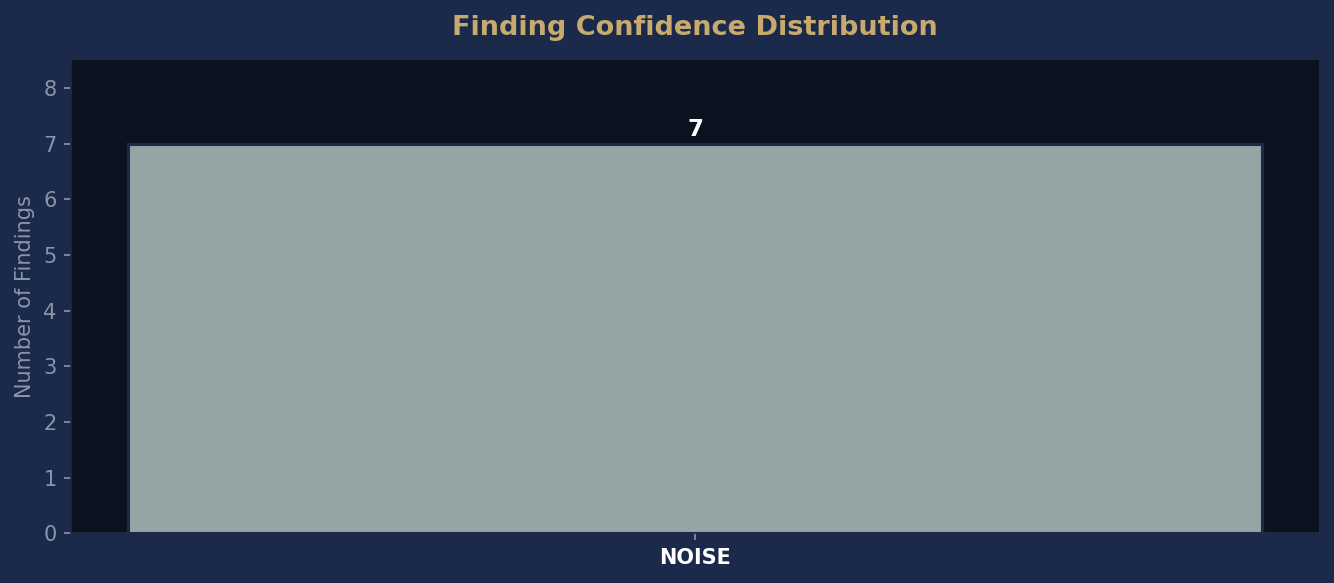
Distribution of causal confidence ratings across all findings in this report.
- Every AI tool named and evaluated — not placeholders, actual product names
- Which tools fit Medical Practices specifically and which ones quietly fail
- The compliance traps and implementation risks specific to your practice area
- Conditional recommendations — which tool fits your specific operation and why
- Confidence ratings on every finding so you know what's solid and what needs validation
Delivered as a PDF immediately after purchase. No subscription. No upsell.
Full report PDF emailed to you immediately after purchase.