AI Intake Tools for Landscaping: Which One Fits Your Crew
AI CUSTOMER INTAKE AND ONBOARDING TOOL SELECTION FOR LANDSCAPING BUSINESSES: WHICH TOOLS FIT WHICH OPERATIONS AND WHY
You're losing money every day to intake delays, vague scope definitions, and wasted admin time—and you're probably not even seeing where it happens. This report shows you exactly which AI intake tools actually work for landscaping operations like yours, and which ones will sit unused because they don't fit how you actually work.
Where Your Money's Actually Leaking
When a customer calls or fills out an intake form and you don't respond in the next two hours, they book someone else. That's not a lost lead—that's a lost job. If you're running residential maintenance crews and relying on manual intake, you're probably losing 10-15% of your leads just to response lag. A simple chatbot-style intake tool gets quotes back to customers in minutes, not hours, and kills that leak immediately.
Your second leak is scope creep masquerading as clarity. On design-build projects especially, customers talk about what they want across multiple conversations—the patio they mentioned in week two, the drainage problem they noticed in week four. When those details don't feed into your formal quote, you either miss revenue or you price the job too low and your margins disappear. Worse, your field crews show up to jobs missing critical context about grade changes, utilities, or what the client actually signed up for. That's dispatch waste and rework.
Your third leak is pure admin time. If you have one or two office staff manually typing customer information into your system, creating intake notes, pulling together scopes, and then manually checking what specialty requirements the job actually needs—you're burning 5-10 hours a week on work that should be automated. For small and mid-size landscaping shops, that's real money on the table.
The Tools That Actually Fit Landscaping Businesses
There are five tools that matter for landscaping intake right now: ServiceTitan, Housecall Pro, AgentZap, Aspire Software, and LMN by Granum. They're not interchangeable. Your business model determines which one actually works.
If you run residential mowing and maintenance with a small crew and no office staff, Housecall Pro or AgentZap fit your life. They work as chatbot-style intake systems—customers get instant quotes, you get qualified leads automatically, and there's almost no manual data entry. If you run commercial maintenance contracts plus hardscape work and you have one or two office staff, ServiceTitan or LMN by Granum give you dual intake modes: simple contracts flow through fast, but custom projects get routed to a scope-capture workflow. If you do design-build work with designers or project managers who iterate on scope across weeks of client conversations, Aspire Software is built for that—it captures scope context as your team works instead of forcing a one-time form fill.
If your primary work is tree care, irrigation, or seasonal specialty jobs where your crew is in the field most of the time, you need mobile-first tools with pre-built technical assessment templates so your crew can capture the actual conditions on site instead of guessing back at the office.
One critical warning: if you don't have a working CRM yet—a place to actually store leads and customer data—don't buy an AI intake tool. You'll have nowhere to send the qualified leads it creates.
The specific fit matrix for your operation size and job type, the implementation sequence that actually works, the compliance gaps specific to landscaping contracts, and the risk profile of each tool are in the full report.
- Every tool named and evaluated — ServiceTitan, Housecall Pro, AgentZap, Aspire Software, LMN by Granum
- Which tools fit landscaping businesses specifically and which quietly fail
- The compliance traps and implementation risks specific to your slice
- A sequenced recommendation — what to buy first, what to wait on, what to avoid
- Confidence ratings on every finding so you know what's solid
Delivered as a PDF immediately after purchase. No subscription. No upsell.
Causal Relationship Graph
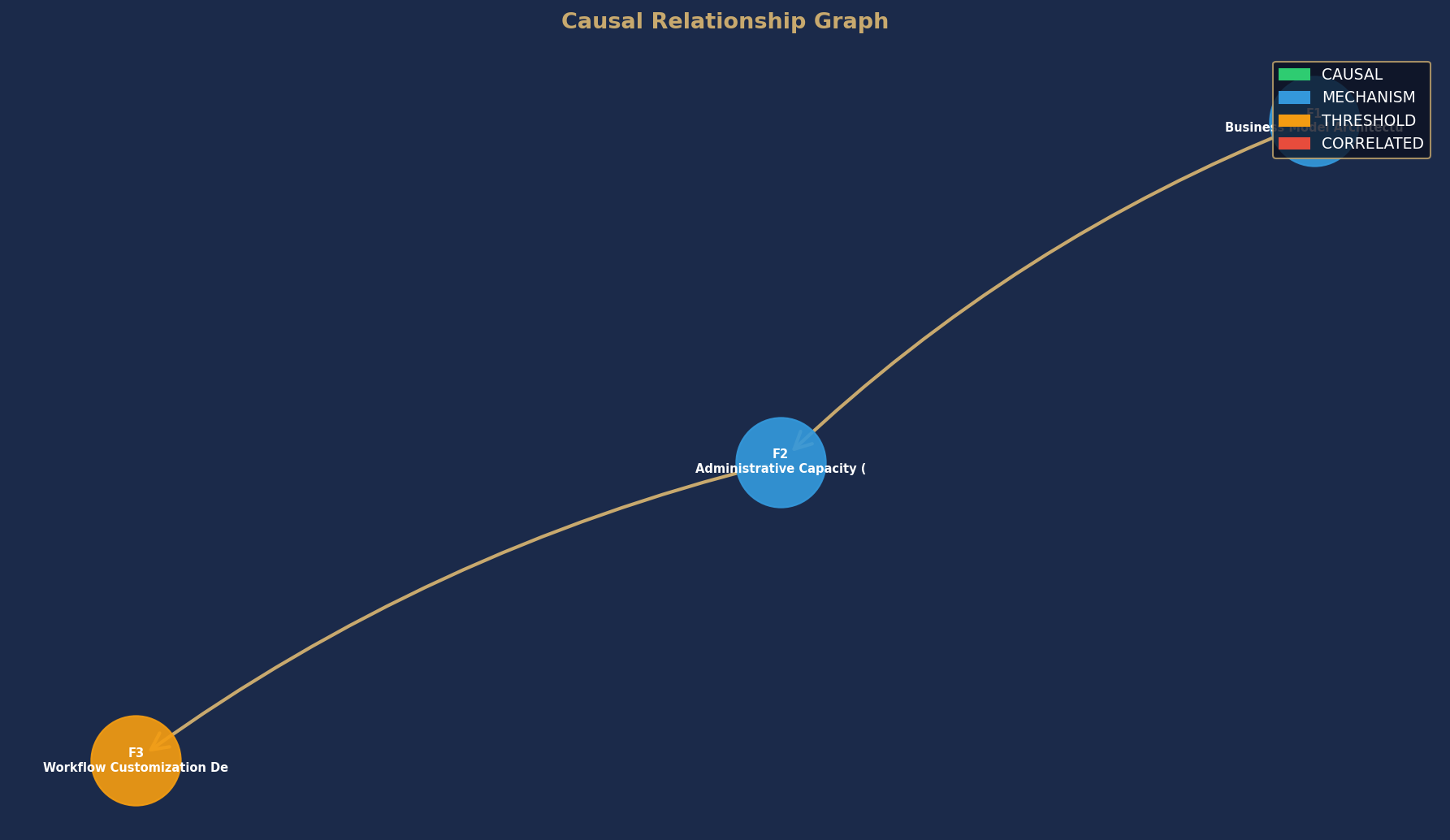
Node colors indicate causal confidence rating. Arrows show directional causal relationships identified in this analysis.
- Every AI tool named and evaluated — not placeholders, actual product names
- Which tools fit Landscaping Companies specifically and which ones quietly fail
- The compliance traps and implementation risks specific to your practice area
- Conditional recommendations — which tool fits your specific operation and why
- Confidence ratings on every finding so you know what's solid and what needs validation
Delivered as a PDF immediately after purchase. No subscription. No upsell.
Full report PDF emailed to you immediately after purchase.