AI Reputation Tools for Independent Pharmacies: Which Ones Actually Work for You
AI REPUTATION TOOLS FOR INDEPENDENT PHARMACIES: WHICH ONES FIT YOUR OPERATION AND WHY
Patient churn from unaddressed online reviews and slow response times is costing your independent pharmacy real revenue and referrals. Your competitors' review responses are visible to prescribers and patients before yours are—and you're likely managing reviews manually across four different platforms while your staff spends hours each week on work that could be automated.
Where Your Money's Actually Leaking
Independent pharmacies lose patients through two channels that most owners don't track until it's too late. First: unaddressed online reviews. A patient leaves one negative review about wait times or missing medication stock on Google or Healthgrades. You don't see it for three days. By then, the patient has already switched to the competitor pharmacy two blocks away. A single lost patient represents $1,500 to $3,000 in annual revenue gone—and that's before you factor in the prescriber who stops sending volume because your clinical reputation on platforms like Healthgrades looks weak compared to the chain pharmacy down the street.
Second leak is invisible time burn. Your staff member spends 45 minutes every Monday manually logging into Google Business Profile, Yelp, and Healthgrades to check new reviews and craft responses. Over a year that's 39 hours—roughly one full workweek of labor costing you $780 to $1,200 in wages just to keep up with what a $100-per-month tool does automatically. If you operate three locations, that number triples. For specialty and compounding pharmacies, the problem gets worse: generic review platforms measure the wrong things. They surface retail metrics like "cleanliness" and "speed" when your actual reputation driver is clinical accuracy and prescriber trust—signals that standard review tools don't even capture.
The Tools That Actually Fit Independent Pharmacies
Two tools dominate the independent pharmacy space: Birdeye and Podium. They solve different problems for different pharmacy operations. Birdeye is designed for multi-location operators—three locations or more. It aggregates reviews across 200+ platforms (Google, Yelp, Healthgrades, Facebook, and others) into a single dashboard, automates review requests to patients after transactions, and uses AI to suggest response templates. If you're on a cloud-based POS system with API capability, Birdeye can pull patient data directly and trigger review requests without manual work. The monthly cost runs $300 to $800 depending on location count and feature tier.
Podium works differently and fits a narrower use case: single-location pharmacies doing $2 million-plus in annual revenue with strong margins. It focuses on text-based review requests—texting patients immediately after they pick up prescriptions asking them to rate their experience. Setup is faster because Podium doesn't require deep POS integration. The monthly cost is lower, around $150 to $300. The tradeoff is that Podium's workflow assumes patients will respond to texts, which works well for retail volume but doesn't solve the clinical reputation problem for specialty pharmacies.
Which one fits your pharmacy depends on three factors: your location count, your annual revenue, and whether your POS system can connect via API. Those specifics determine whether an AI reputation tool will actually pay for itself or sit unused after three months.
The exact decision tree for your pharmacy type, the integration timeline and hidden costs specific to your POS platform, and the full risk matrix showing when to skip these tools entirely are in the full report.
- Every tool named and evaluated — Birdeye, Podium
- Which tools fit Independent Pharmacies specifically and which quietly fail
- The compliance traps and implementation risks specific to your slice
- A sequenced recommendation — what to buy first, what to wait on, what to avoid
- Confidence ratings on every finding so you know what's solid
Delivered as a PDF immediately after purchase. No subscription. No upsell.
Finding Confidence Distribution
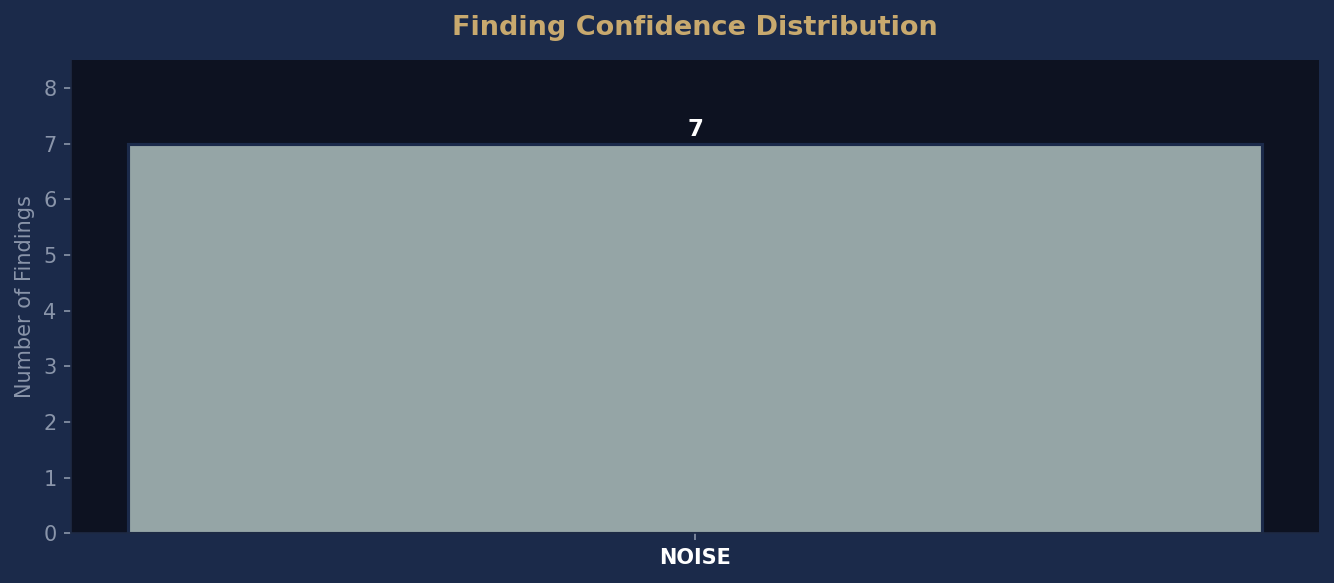
Distribution of causal confidence ratings across all findings in this report.
- Every AI tool named and evaluated — not placeholders, actual product names
- Which tools fit Independent Pharmacies specifically and which ones quietly fail
- The compliance traps and implementation risks specific to your practice area
- Conditional recommendations — which tool fits your specific operation and why
- Confidence ratings on every finding so you know what's solid and what needs validation
Delivered as a PDF immediately after purchase. No subscription. No upsell.
Full report PDF emailed to you immediately after purchase.