AI Scheduling Tools for Trucking: Which Actually Fit Your Operation
AI APPOINTMENT SCHEDULING FOR FREIGHT AND TRUCKING: WHICH TOOLS FIT YOUR OPERATION AND WHY
Your freight operation loses money every time a driver sits idle at a dock, every time your dispatcher makes a manual confirmation call, and every time a scheduling system fails to talk to your TMS or customer's EDI system. This report identifies which AI appointment scheduling tools actually work for owner-operators, regional fleets, and brokerages — and which ones will cost you more than they save.
Where Your Money's Actually Leaking
Driver detention costs your industry $3.6 billion annually. On your operation, that translates to $15,000 to $35,000 per year in avoidable fees — money you're paying to facilities because your drivers are waiting for dock appointments that should have been scheduled days ago. Every hour a driver sits costs you revenue and burns fuel. Every manual confirmation call your dispatcher makes is time not spent on actual dispatch work or customer relationships.
Most freight operations still use email, phone calls, or basic spreadsheets to coordinate dock appointments with customers and facilities. Your dispatcher is spending 3 to 5 hours per week on clerical confirmation work — checking if slots are still open, calling drivers to confirm, updating spreadsheets, handling last-minute changes. That's $500 to $2,000 per month in pure labor waste on a task that a scheduling tool should automate in real time.
The silent killer is integration failure. Your TMS doesn't talk to your customer's EDI system. Your GPS telematics don't feed into your scheduling tool. When these systems don't integrate, the scheduling features look good in a demo but fail silently in production. You see no appointments actually scheduled, no automatic customer notifications, no real-time dock slot updates. You cancel the tool within six months.
The Tools That Actually Fit Freight And Trucking (Including Owner-Operators, Regional Fleets, And Brokerages)
The market includes ten serious players: Samsara, McLeod Software, TMW Suite, Trimble, Driver Schedule, Goodcall, Opendock, C3 Solutions, Descartes Dock Appointment Scheduling, and Route4Me. None of them fit every operation. Your tool choice depends almost entirely on your operation type and what systems you already run.
If you're an owner-operator running 1 to 5 trucks, you need lightweight, driver-facing tools like Goodcall that integrate with your phone and load boards — not enterprise TMS suites. If you're a regional fleet running 30 to 150 loads per week, tools like Samsara make economic sense because they integrate GPS telematics with your existing TMS platform and automate customer notifications without requiring a full system replacement. If you're running over 150 loads per week across multiple customer EDI systems, full-stack solutions like TMW Suite, McLeod Software, or Trimble become rational because dynamic rescheduling and real-time GPS integration actually pay for themselves in detention reduction and dispatcher time savings.
The conditional logic is simple: if your chosen tool doesn't integrate natively with your existing TMS and your customer's EDI systems, the scheduling features will not function as advertised. Buy the wrong tool for your operation size, and you'll be canceling within six months. Buy the right tool without ensuring it talks to your current systems, and you'll spend weeks in integration work before anything works.
The implementation sequence, the compliance traps specific to freight operations, the detailed integration requirements for each tool, and the risk matrix for each player are in the full report.
- Every tool named and evaluated — Samsara, McLeod Software, TMW Suite, Trimble, Driver Schedule
- Which tools fit Freight and Trucking (including owner-operators, regional fleets, and brokerages) specifically and which quietly fail
- The compliance traps and implementation risks specific to your slice
- A sequenced recommendation — what to buy first, what to wait on, what to avoid
- Confidence ratings on every finding so you know what's solid
Delivered as a PDF immediately after purchase. No subscription. No upsell.
Causal Relationship Graph
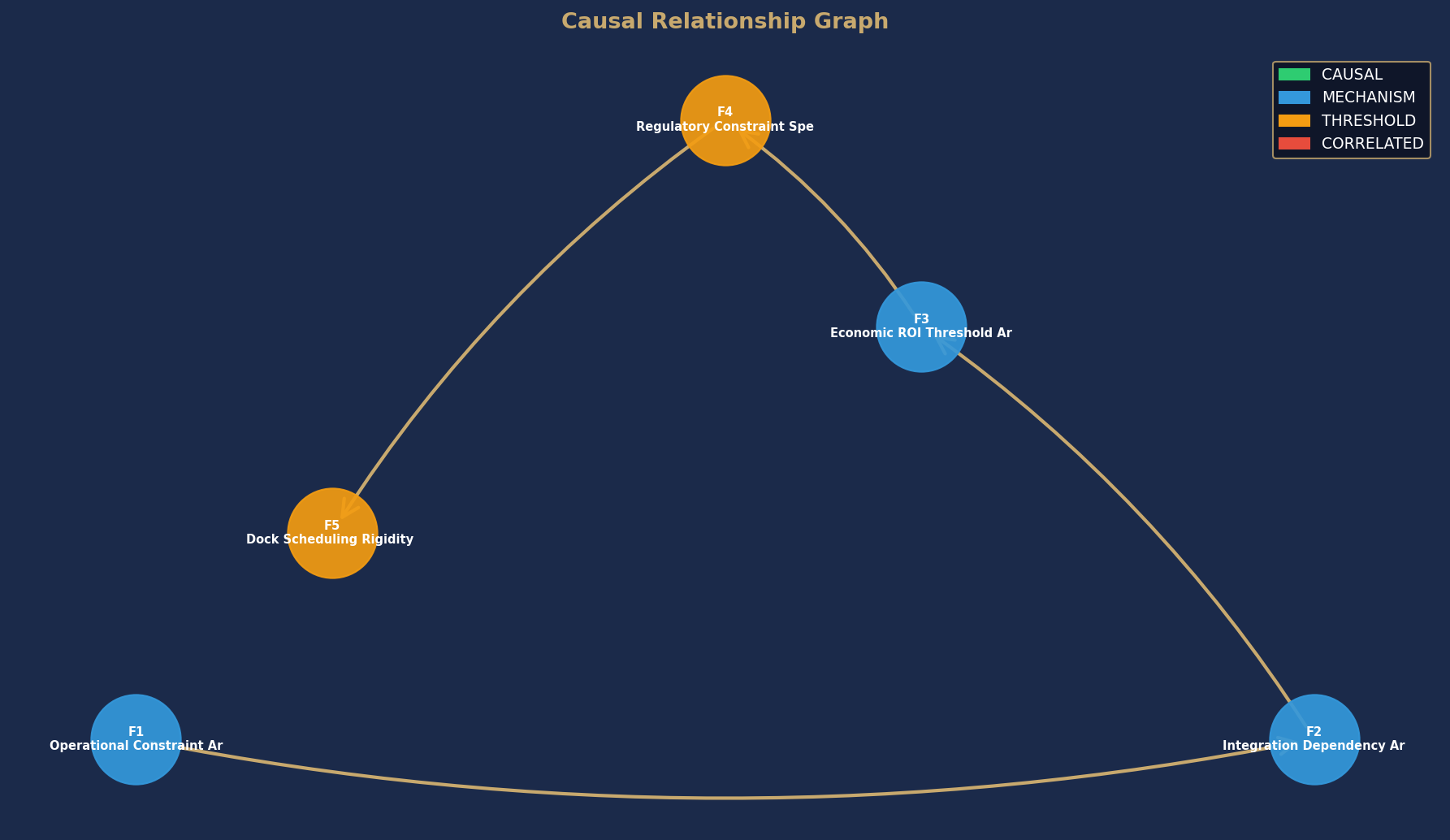
Node colors indicate causal confidence rating. Arrows show directional causal relationships identified in this analysis.
- Every AI tool named and evaluated — not placeholders, actual product names
- Which tools fit Freight And Trucking Companies specifically and which ones quietly fail
- The compliance traps and implementation risks specific to your practice area
- Conditional recommendations — which tool fits your specific operation and why
- Confidence ratings on every finding so you know what's solid and what needs validation
Delivered as a PDF immediately after purchase. No subscription. No upsell.
Full report PDF emailed to you immediately after purchase.