AI Receptionists for Dental Practices: Which Tools Actually Work for Your Setup
AI Customer Support and FAQ Tool Selection for Dental Practices: Which Tools Fit Which Operations and Why
Your front desk is drowning. Phones ring while staff are checking in patients, verifying insurance, and pulling up old callbacks. Between 32% and 38% of incoming calls never get answered during your open hours—and each one costs you $500 to $1,000 in immediate appointment value, plus $8,000 or more in lost lifetime patient value. This report identifies which AI customer support and FAQ tools actually stop the bleeding in dental practices, and which ones waste your money.
Where Your Money's Actually Leaking
Your front desk staff are juggling four simultaneous tasks: answering the phone, checking in patients, verifying insurance, and returning callbacks. Phones always lose. The result is missed calls—and in dental, a missed call isn't just poor service. It's a lost appointment slot, often filled by a competitor who answered. At $500 to $1,000 per appointment, losing even two calls a day costs you $10,000 a month in opportunity cost alone. Over a year, that's the salary of another team member.
The problem gets worse as you grow. At a five-to-ten provider practice, insurance and billing questions consume 25% to 35% of all incoming calls. These aren't appointment requests. They're complex, patient-specific questions that require staff time to research and answer. They clog your phones and delay your appointment booking calls even further. A solo practice might handle this by staying late. A larger practice bleeds revenue while staff scramble.
Most dental practices don't measure this leak—so they don't know it's there. But it's real. It's costing you thousands every month, and it's entirely recoverable with the right tool.
The Tools That Actually Fit Dental Practices
Eight tools dominate the dental AI customer support space: Dentrix Ascend, Curve Dental, Open Dental, Arini, Weave, Dental Intelligence, Emitrr, and PatientGain. They don't all do the same thing, and they don't all fit the same practice.
If you run a solo or two-provider general practice on a modern cloud-based PMS like Dentrix Ascend, Curve Dental, or Open Dental with an active API, purpose-built dental receptionists like Arini, Weave, or Dental Intelligence will recover your missed calls and book appointments automatically. You'll see payback—real revenue recovery—in 2 to 4 weeks. These tools are built specifically for dental workflows. They understand appointment slots, cancellation windows, and patient history. They don't waste time on generic chatbot logic.
If you have five or more providers with mixed call volume—routine appointment requests mixed with insurance questions, billing disputes, and treatment plan clarifications—a basic FAQ chatbot won't work. You need a hybrid tool like Emitrr or PatientGain that handles routine bookings automatically while routing complex calls to your staff. These tools triage incoming calls so your team only talks to patients who actually need a human.
Your practice management software matters more than the AI tool itself. If you're still running legacy on-premises PMS without real-time API access, no AI customer support tool will recover those missed calls effectively. The tool will log messages instead of booking appointments, and your payback timeline extends from weeks to months—or becomes impossible entirely.
The specific tool fit for your practice depends on your PMS platform, your practice size, your call volume mix, and your technical integration capability. That framework—and the implementation sequence, the compliance traps specific to dental practices, and the risk matrix for each tool—is in the full report.
- Every tool named and evaluated — Dentrix Ascend, Curve Dental, Open Dental, Arini, Weave
- Which tools fit dental practices specifically and which quietly fail
- The compliance traps and implementation risks specific to your slice
- A sequenced recommendation — what to buy first, what to wait on, what to avoid
- Confidence ratings on every finding so you know what's solid
Delivered as a PDF immediately after purchase. No subscription. No upsell.
Causal Relationship Graph
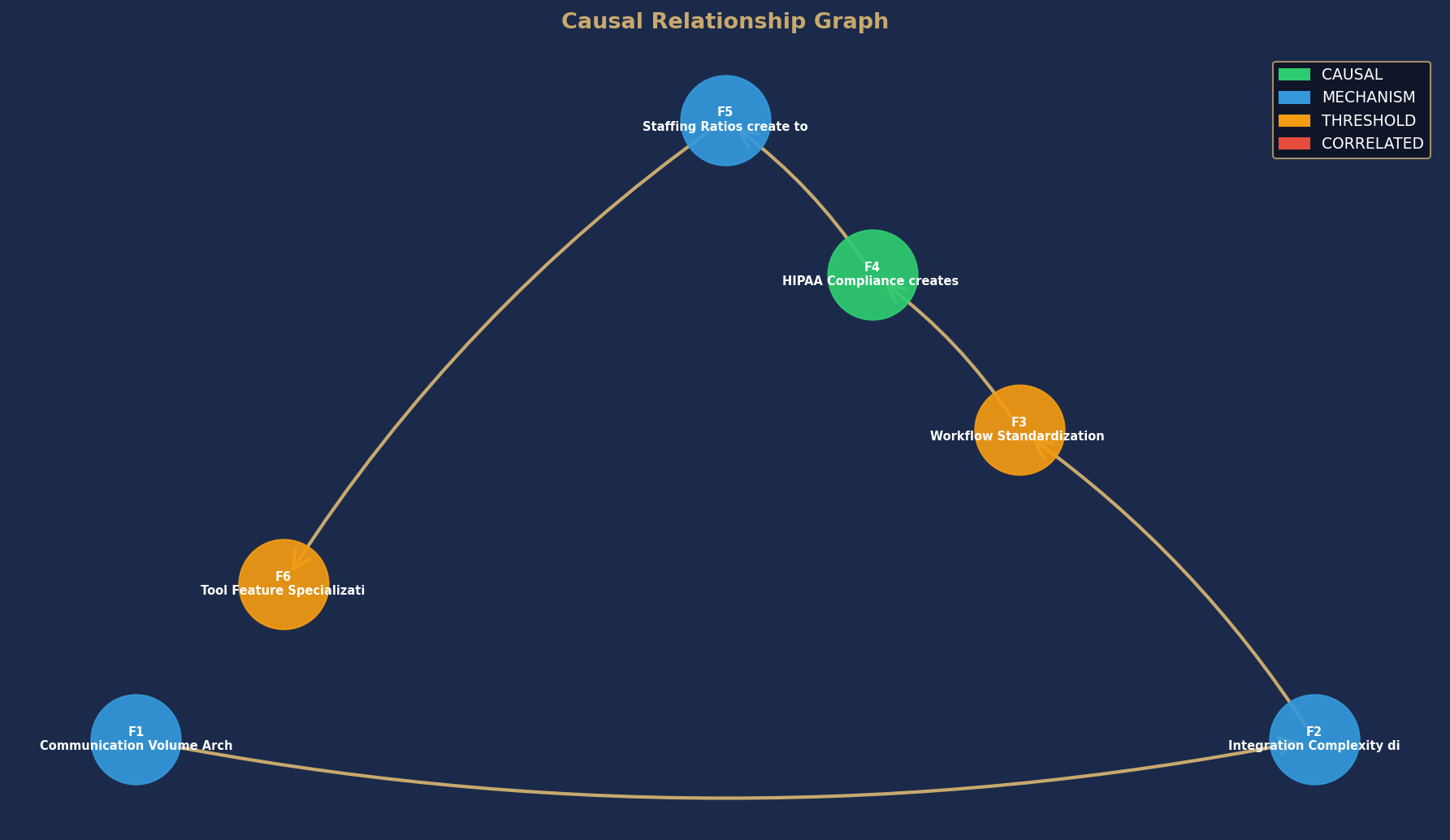
Node colors indicate causal confidence rating. Arrows show directional causal relationships identified in this analysis.
- Every AI tool named and evaluated — not placeholders, actual product names
- Which tools fit Dental Practices specifically and which ones quietly fail
- The compliance traps and implementation risks specific to your practice area
- Conditional recommendations — which tool fits your specific operation and why
- Confidence ratings on every finding so you know what's solid and what needs validation
Delivered as a PDF immediately after purchase. No subscription. No upsell.
Full report PDF emailed to you immediately after purchase.